30Apr2026
Best Scoliosis Treatment in India: Guide for International Patients
Scoliosis is a sideways curve of the spine that can mean a small C- or S-shaped bend when seen from behind. Most people with scoliosis have mild curves that do not require treatment. In other cases — especially when the curve grows or causes symptoms — medical care can restore balance, relieve pain and protect breathing and function.
This guide explains scoliosis clearly: what it is, how doctors diagnose it, when to treat, and the modern treatment options available. If you are an international patient looking for scoliosis care, this guide helps you plan your visit to India, choose a hospital, talk with the best spine teams, and manage recovery.
Quick overview — what is scoliosis?
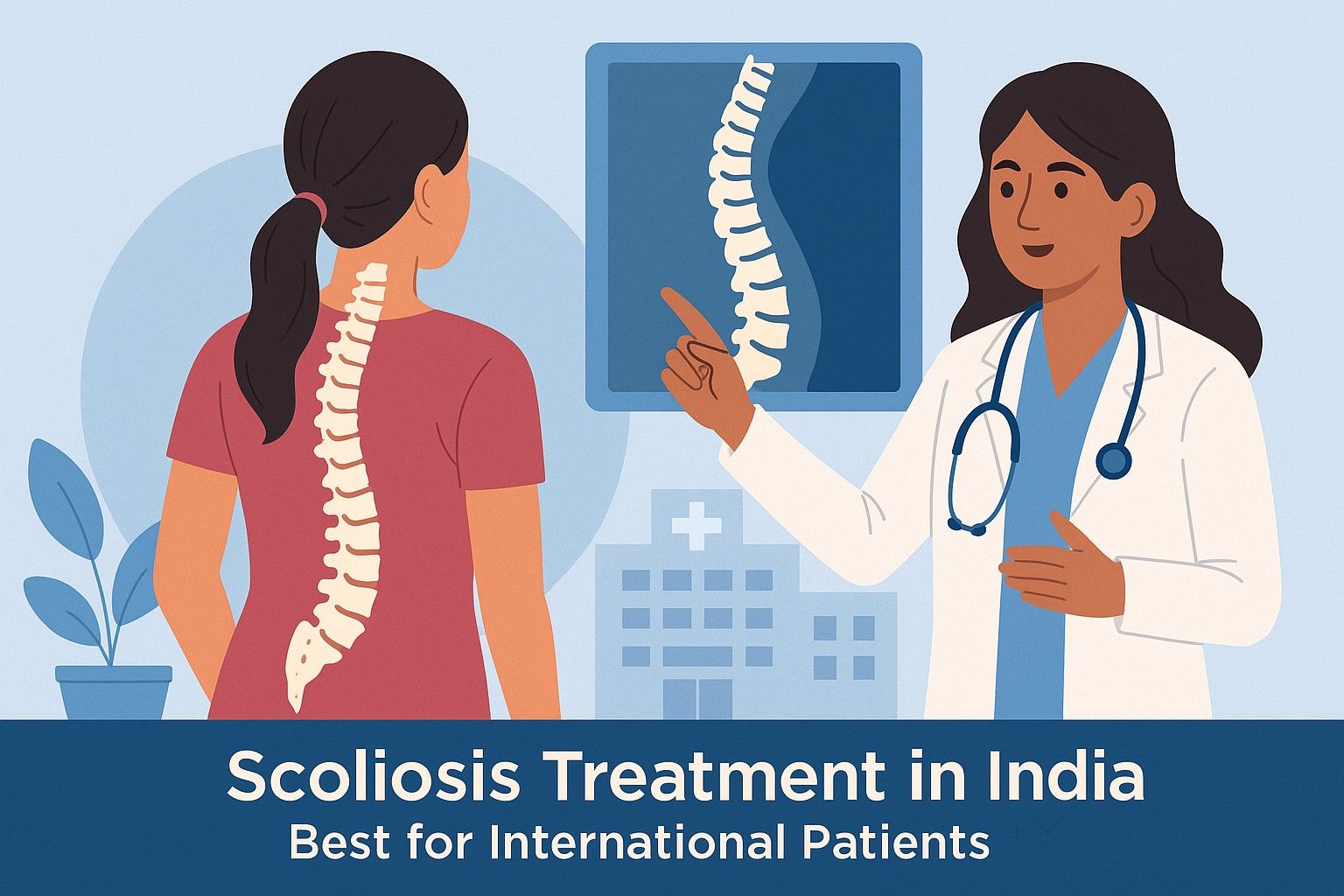
Scoliosis means the spine curves sideways more than normal. A healthy spine has gentle forward and backward curves. Scoliosis adds a lateral curve that forms a C or S shape. Curves may rotate the vertebrae and make one side of the ribs or back appear higher.
Most scoliosis begins in childhood or adolescence, but it can be diagnosed in adults as well. Some people live their whole lives with a mild curve. Others develop a curve that gets worse and causes pain, poor posture or breathing problems.
Types of scoliosis
Scoliosis is described by cause and by age at diagnosis. The main types are:
Idiopathic scoliosis — the most common type. "Idiopathic" means doctors do not know the exact cause. Genetics play a role; families sometimes see the condition appear in more than one member.
Congenital scoliosis — present at birth when spinal bones (vertebrae) form abnormally during fetal development.
Neuromuscular scoliosis — linked to disorders that affect nerves or muscles (for example, cerebral palsy, muscular dystrophy, spinal cord injury or spina bifida).
Degenerative (adult-onset) scoliosis — occurs when aging or disc degeneration changes the spine’s balance. Symptoms often appear later in life.
Clinicians also label idiopathic scoliosis by age:
Infantile (under age 3)
Juvenile (ages 4–10)
Adolescent (ages 11–18)
Adult idiopathic (diagnosed after skeletal growth is complete)